A Panorama of Greek Folk Musical Instruments
Permanent Exhibition
The exhibition features musical instruments and sound-producing objects from across the Greek world.
The exhibition presents a panorama of the musical instruments that have been used throughout the Greek world over the last three centuries.
The instruments are arranged in four sections, corresponding to the categories recognised by Ethnomusicology—Membranophones, Aerophones, Chordophones and Idiophones—according to the Hornbostel–Sachs classification system, developed by the German ethnomusicologists and organologists Erich Moritz von Hornbostel and Curt Sachs. This classification is based on the material that vibrates to produce sound.
Among the exhibits are instruments crafted by renowned Greek instrument makers of the 19th and 20th centuries, including Ioannis Stathopoulos, Dimitrios Mourtzinos, Fotis Avgeris and Manolis Venios, as well as instruments that belonged to distinguished musicians, such as the clarinets of Tasos Halkias, Nikos Karakostas and Vasilis Soukas, the santouri of Aristidis Moschos, the guitar of Danae Stratigopoulou, the lyra of Nikos Xylouris and the oud of Nikos Saragoudas.
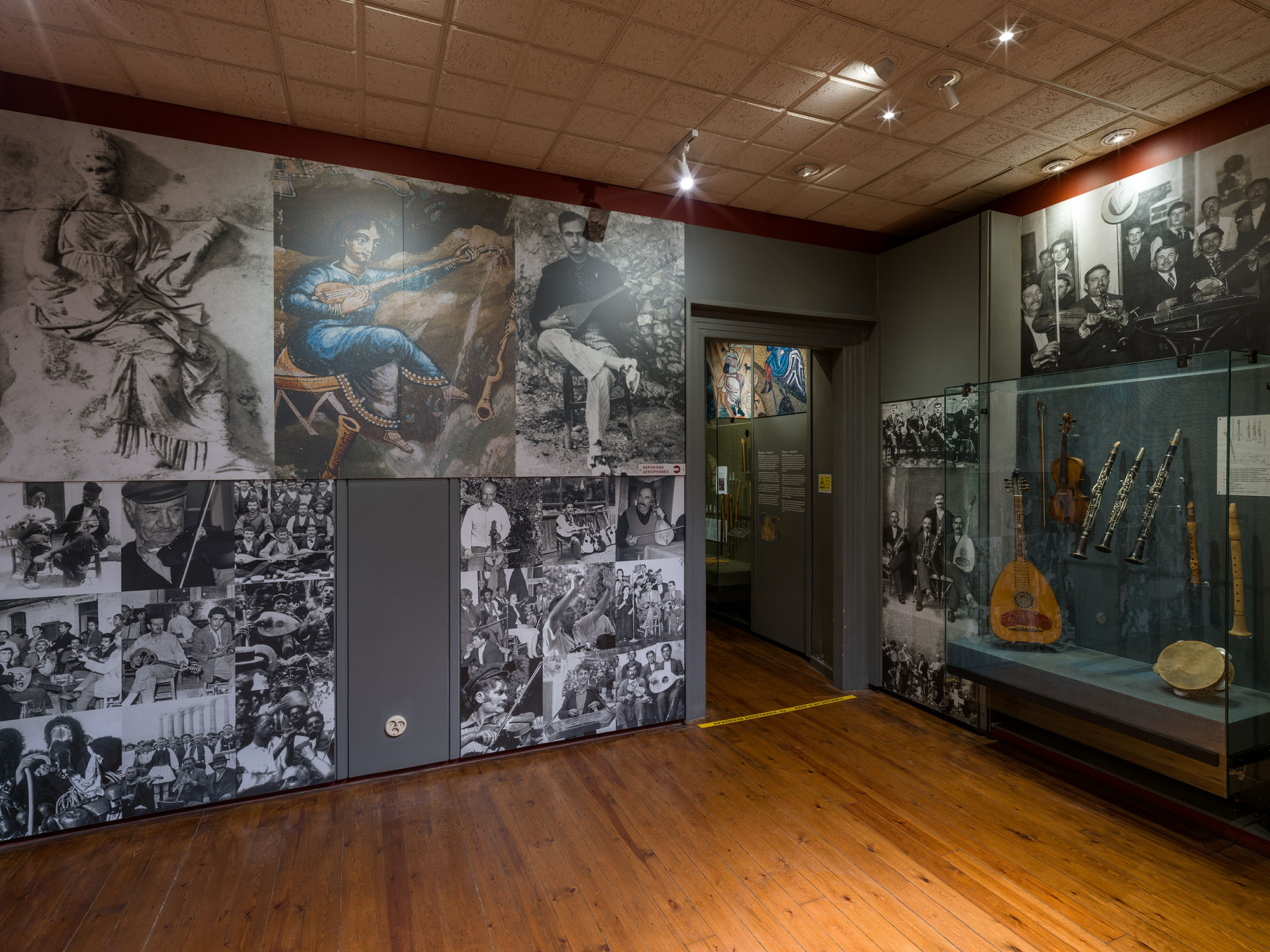
The exhibition is enriched with extensive visual material, including Byzantine and post-Byzantine depictions, as well as photographs from more recent times featuring musical instruments, musicians and instrument makers. Visitors can also explore scenes from the annual cycle of traditional customs in Greece, documenting the construction, use and historical development of Greek folk musical instruments.
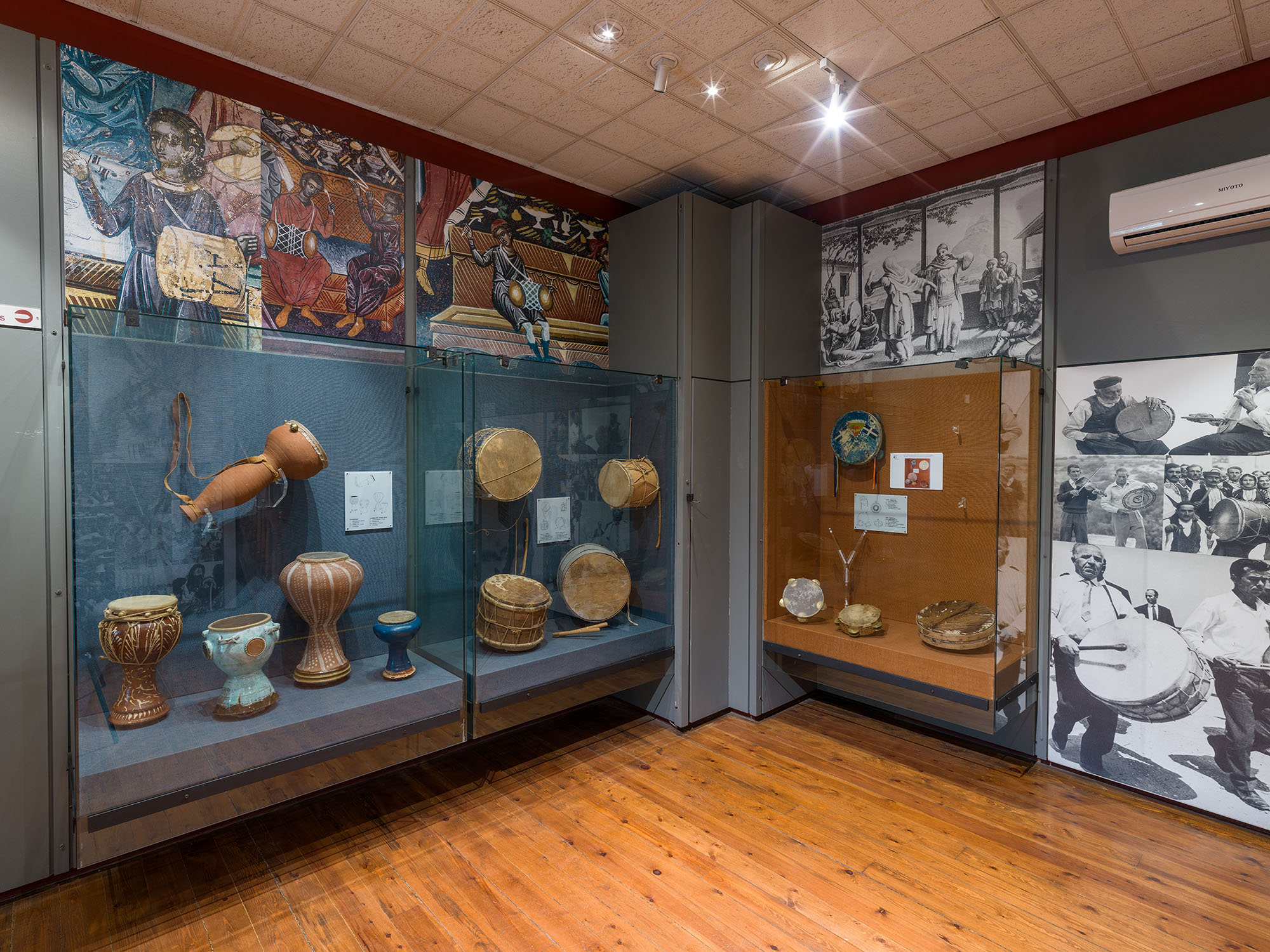
Your journey into the world of Greek traditional music begins on the ground floor of the Museum, where two major categories of musical instruments are presented: membranophones and aerophones.
Membranophones are instruments that produce sound through the vibration of a stretched membrane. This category includes instruments such as the toubeleki, daouli and various types of defi (frame drums).
In aerophones, sound is produced by the vibration of a column of air within the instrument. This group includes simpler instruments, such as the flogera and the souravli, as well as more complex ones, such as the tsambouna and the gaida.
In the same gallery, visitors can discover the instruments of the kompania, the quintessential folk ensemble of mainland Greece from the mid-19th century onwards.
Finally, the ground floor also hosts the Museum’s newest exhibition section, featuring instruments and personal memorabilia donated by legendary performers of Greek folk music. This section pays tribute to the individuals who keep the memory and heritage of musical tradition alive, while also highlighting the people-centred approach that lies at the heart of the Museum’s activities.
The first floor of the Museum is dedicated to chordophones, instruments that produce sound through the vibration of a string stretched between two points.
Chordophones are divided into three subfamilies, according to playing technique. In the first, the plucked chordophones, the musician plucks the string with the fingers or with a plectrum. This family includes popular instruments such as the laouto, the guitar, the bouzouki and the baglamas, as well as the oud, the mandolin and the kanonaki.
The second category, the struck chordophones, includes only the santouri — an impressive multi-stringed instrument with one hundred strings or more, which the musician strikes with two small beaters.
In the third category, the bowed chordophones, the musician neither plucks nor strikes the string, but bows it. Emblematic instruments of this family include the lyra and the violin.
As you make your way down to the Museum’s basement, you will also have the opportunity to encounter a mechanical musical instrument that was once especially popular: the barrel piano.
In the basement, visitors can explore the distinctive character and impressive variety of the instruments known as idiophones.
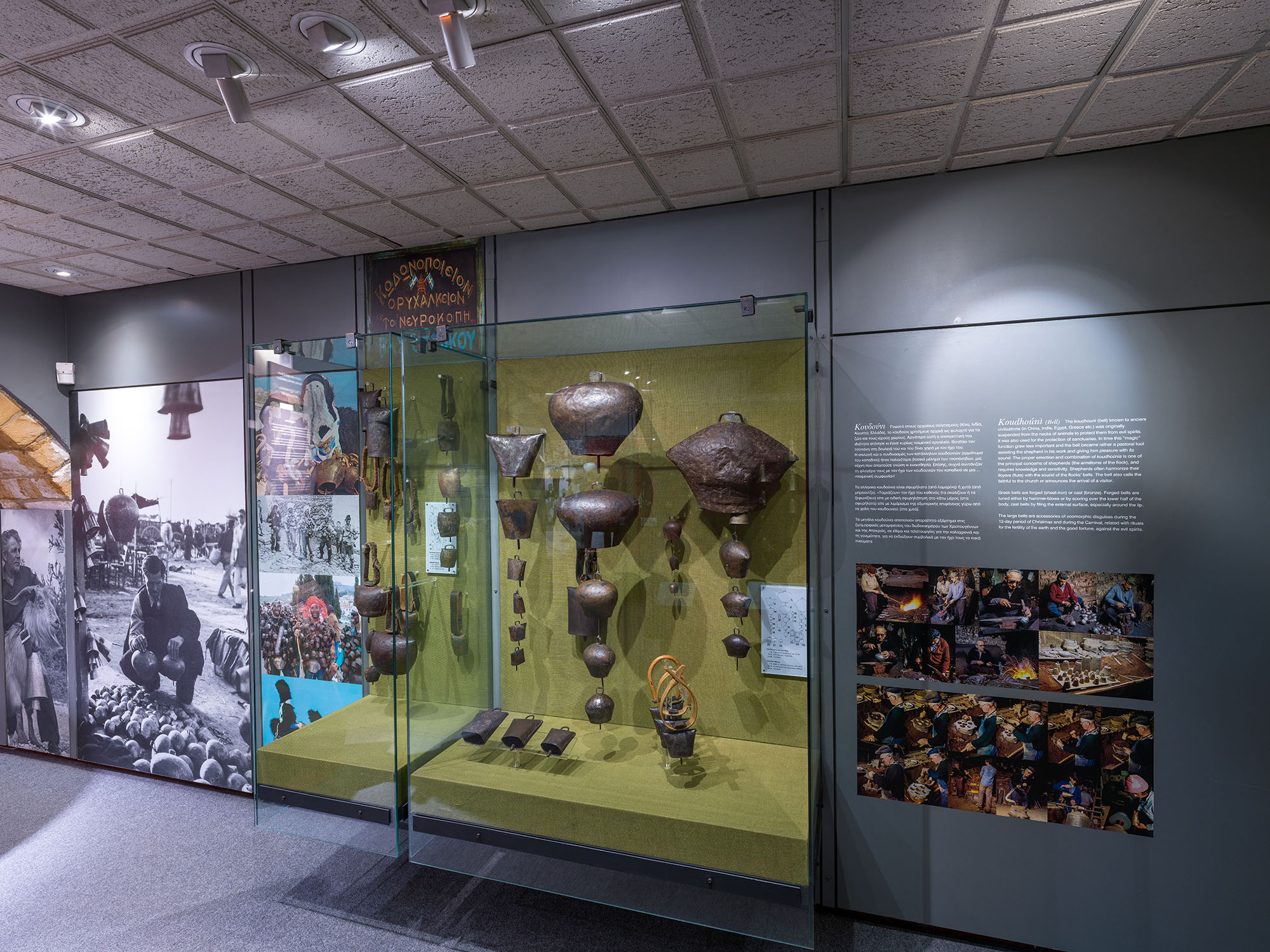
What are idiophones? They are musical instruments that produce sound when their entire body vibrates. Among them, bells stand out as one of the oldest types, found throughout the world and across cultures.
In the same space, visitors will encounter a wide range of other idiophone musical instruments: some very familiar, such as the triangle that accompanies children’s Christmas carols, and others more unusual and unexpected, such as fireplace tongs and small glass cups.
You will also see sound-producing toys and objects, such as whistles, ratchets and lalitses.
This highly engaging basement exhibition is completed by the semantra, emblematic sound-producing objects used in monasteries.